
At A Glance
Planning your stay?
Stays — check availability and book direct.
Malta delivers one of Europe’s warmest, sunniest climates, with over 3,000 hours of sunshine, a six-month swim season from late May to late October, and mild 14-16°C winters perfect for sightseeing.
- Annual average 19°C; August peaks at 32°C, January lows around 10°C.
- Sea temperatures stay above 20°C from June to November and peak at 26°C in August.
- July averages zero rain days; December and January average 12-13.
- Late April to early June and September to mid-October give you the best weather-to-price ratio.
- Aster House, my Art-Deco luxury villa, is open year-round — 150 metres from the Sliema seafront, sleeping up to 9.
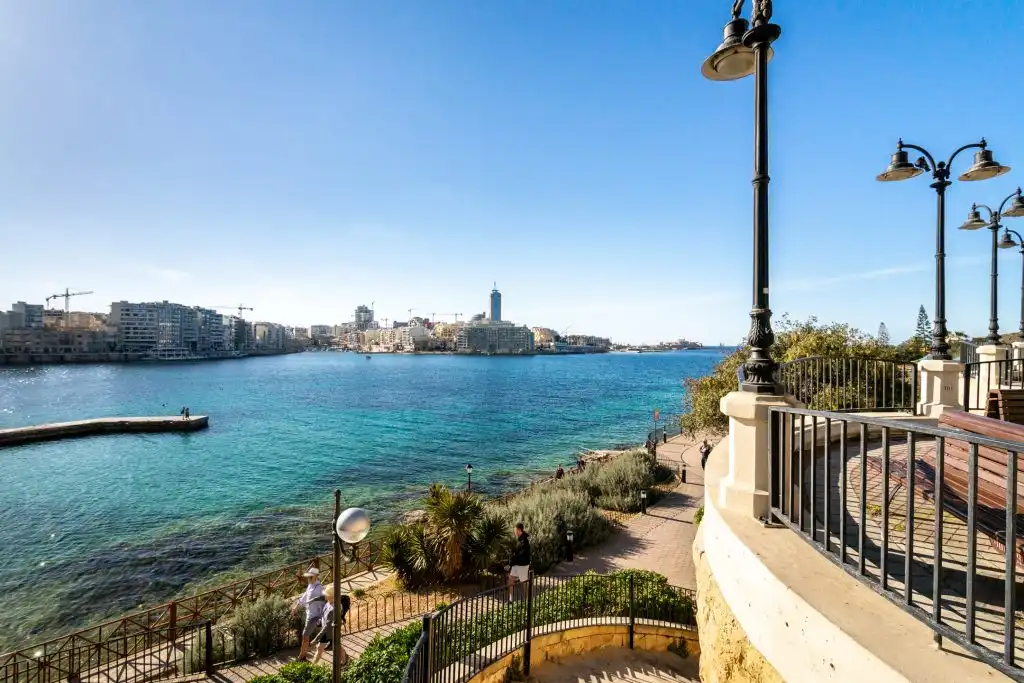
I have lived through every kind of Malta weather in my Sliema villa, from the soft April mornings when the sea is still cool but the bougainvillea is bursting open, to the bone-dry August afternoons when the streets of Valletta radiate heat and the Strand promenade fills up at sunset. Malta’s climate is one of the very best things about choosing it for a luxury family or group trip, and once you understand the rhythm of the year you can plan a stay that fits exactly the kind of holiday you want.
Temperatures, sea temperature, rainfall and crowd levels shift more across the year than most people expect from somewhere this small, and the month you pick shapes the trip more than the address you book. If you are still fixing dates, the best time to visit Malta weighs the trade-offs. Once they are set, where to stay in Malta compares the areas and how many days you need helps size the trip.
Staying in Malta?
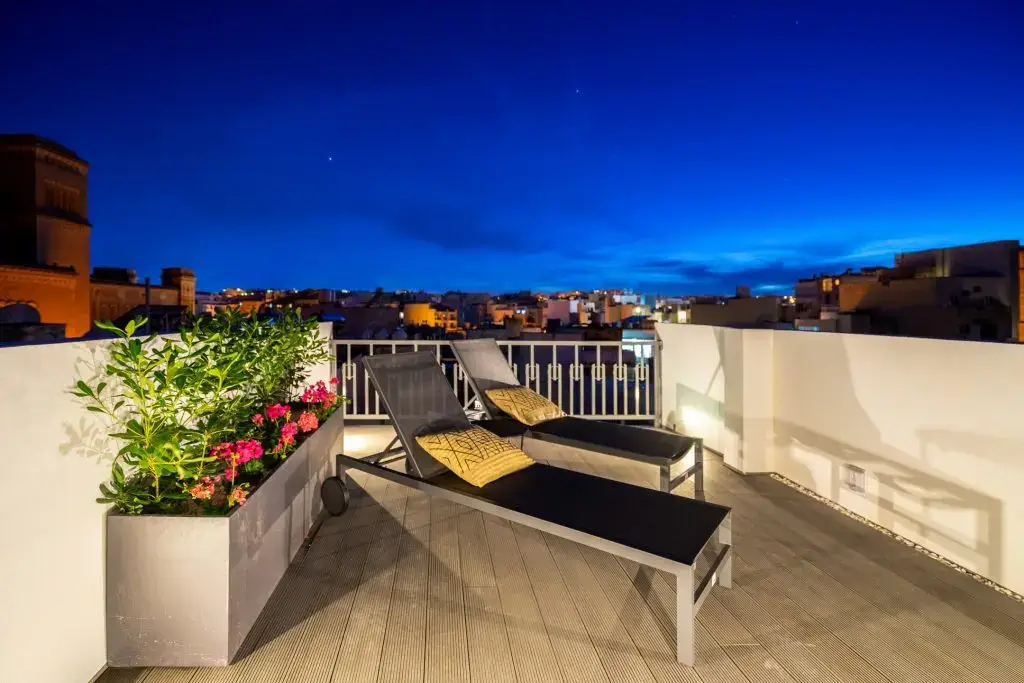
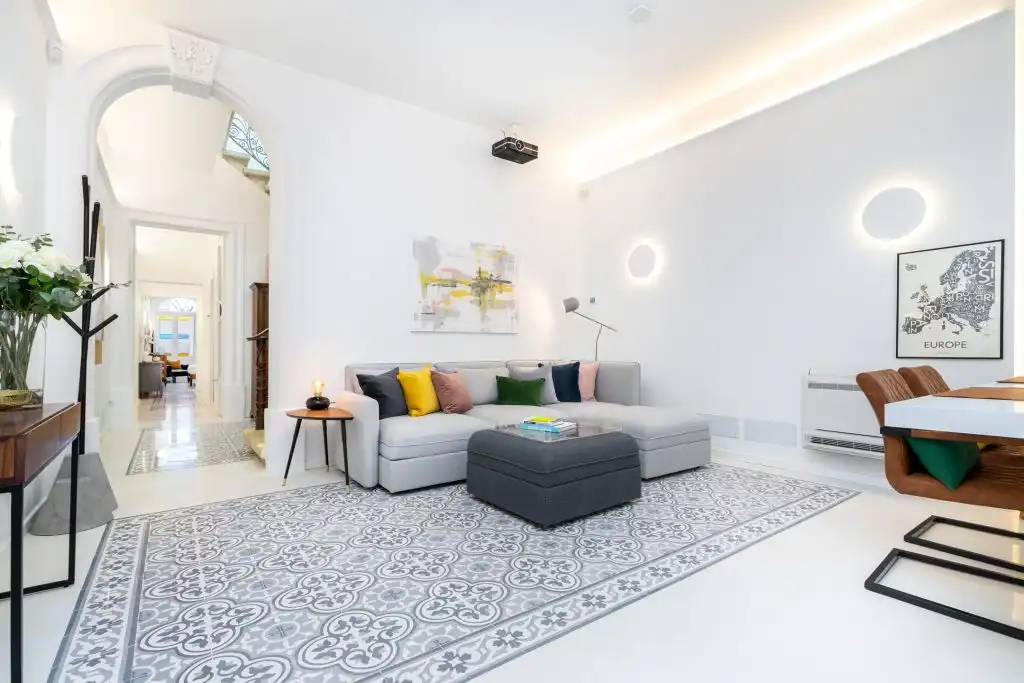
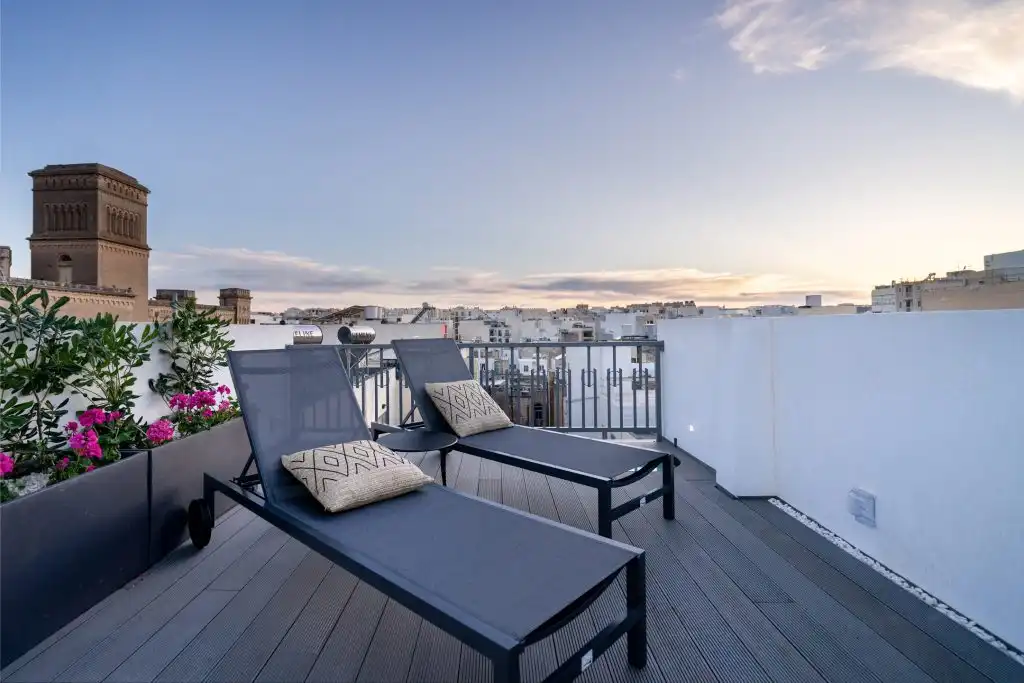
Aster House sleeps up to 9, with a rooftop chillout, a 1930s outdoor tub, and a media room with a 2-metre projector screen. 150 metres from the seafront, 5 minutes from the Valletta ferry.
Malta climate at a glance

Malta sits in the middle of the Mediterranean, roughly 80km south of Sicily and 290km north of Libya, which means our climate is genuinely Mediterranean — long, dry, sunny summers and mild, slightly damp winters. We get over 3,000 hours of sunshine a year, an annual average temperature of 19°C, and we never see snow. What changes month to month is the temperature, the rainfall, and the crowd levels.
| Month | Avg high | Avg low | Sea temp | Rain days | Sun hrs/day |
|---|---|---|---|---|---|
| January | 15°C | 10°C | 16°C | 13 | 5 |
| February | 15°C | 9°C | 15°C | 10 | 6 |
| March | 17°C | 11°C | 15°C | 7 | 7 |
| April | 19°C | 12°C | 16°C | 6 | 8 |
| May | 23°C | 16°C | 18°C | 3 | 10 |
| June | 28°C | 19°C | 22°C | 1 | 11 |
| July | 31°C | 22°C | 25°C | 0 | 12 |
| August | 32°C | 22°C | 26°C | 1 | 11 |
| September | 28°C | 21°C | 25°C | 4 | 9 |
| October | 24°C | 18°C | 23°C | 7 | 7 |
| November | 20°C | 14°C | 20°C | 9 | 6 |
| December | 16°C | 11°C | 18°C | 12 | 5 |
Planning your dates? Aster House live rates for every season are on the booking page, with week-long discounts applied automatically at checkout.
Malta weather by season
Winter in Malta (December to February)
Mild but properly Mediterranean — not warm enough to swim, but bright enough to walk Valletta in shirt sleeves on a still day. Highs sit at 14-16°C, with occasional storms blowing in for half a day at a time. Hotels are at year-low prices, the cruise crowds are gone, and the streets are quiet. Winter is when I bring family to do the cultural side of Malta — Mdina at dusk, the State Rooms in the Grandmaster’s Palace, the Christmas markets in Valletta, and Carnival in Nadur.
Spring in Malta (March to May)
Wildflowers bloom across the Dingli Cliffs, the countryside turns green, and the days lengthen quickly. By mid-May the sea is at 18°C and the bold are already swimming. May is one of my favourite months: 23°C, almost no rain, and the bougainvillea climbing up the front of Aster House is fully out.
Summer in Malta (June to August)
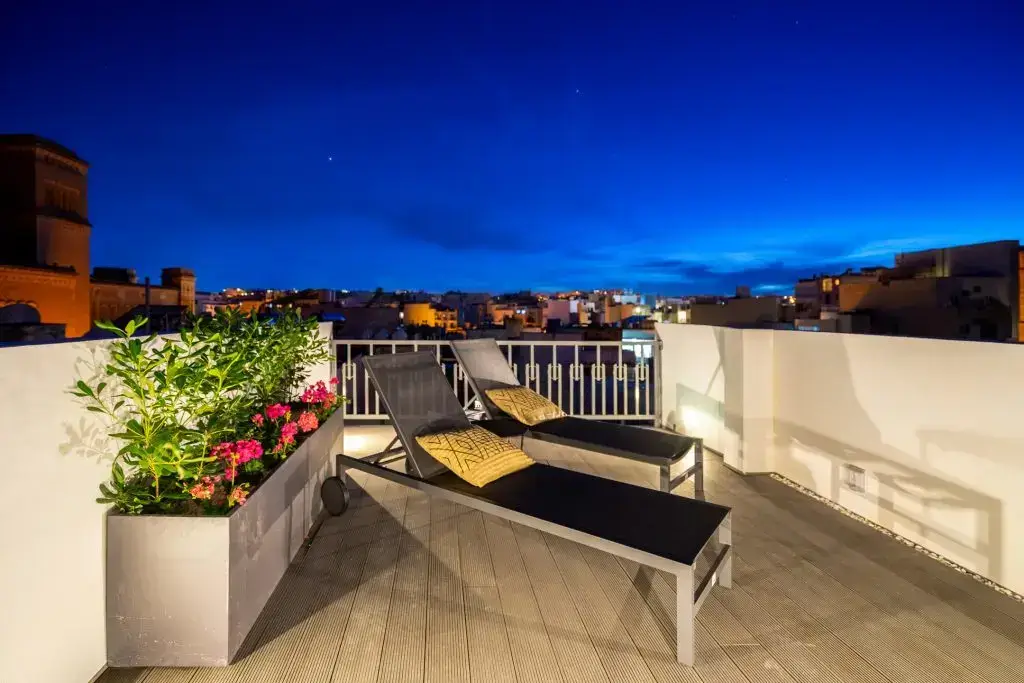
Hot, dry, festa-loud, and gloriously sunny. July and August push past 32°C and Valletta’s stone streets behave like a slow oven by mid-afternoon. The sea is a 26°C bath, every weekend somewhere on the island runs a village festa with brass bands and fireworks, and the rooftop terrace at Aster House is where everyone wants to be after dark. Plan sightseeing for early morning or after 5pm and the heat is no problem.
Autumn in Malta (September to November)
September and October are the smartest months. The sea stays at 25°C through September and 23°C through October, but the air drops to a comfortable 24-28°C and the crowds thin noticeably. By November the rains return, the lidos start closing, and prices fall again.


Month-by-month Malta weather summary
Malta in January
Coldest month of the year, but still 15°C in the daytime. Nights drop to 10°C, so a light jumper for evening walks along the Sliema promenade is sensible. Hotel and villa rates are at their year-low. Carnival prep is underway and the Christmas markets in Valletta run into the first week of January through Epiphany on 6 January. There is more in my full Malta in January guide, including what actually stays open.
Malta in February
Carnival peaks in mid-February. Family-friendly daytime parades roll down Republic Street in Valletta, and Nadur in Gozo runs the older, satirical, adults-only version. Almond blossoms are out across the countryside. Cool but bright. Carnival dates move each year, so check my Malta in February guide before you book.
Malta in March
Spring takes hold. 17°C average highs, fewer rain days, daffodils and orchids in Buskett Gardens and on the cliff walks above Dingli. Easter prep is underway and prices remain low. My Malta in March guide covers what the sea is doing and whether it is swimmable yet.
Malta in April
Comfortable 19°C, low rainfall, full daylight. Easter brings major religious processions through every village — Zebbug, Qormi, Mosta, and Vittoriosa are the most spectacular. Prices begin climbing for Easter week. Easter shifts the crowds around, and my Malta in April guide has the timing.
Malta in May
The shoulder-season sweet spot. 23°C, sea warming to 18°C, dry, long days. Locals call this the perfect month and many of my repeat guests at Aster House book May on rotation. My Malta in May guide goes into why this is the month most locals would pick.
Malta in June
Beach season opens. 28°C average highs, sea at 22°C, festa season ramps up with village patron-saint celebrations every weekend. The Mnarja folk festival at Buskett on 28-29 June is one of the oldest and best. See my Malta in June guide for when the sea actually warms up enough to swim.
Malta in July
Hot and dry. 31°C average highs, virtually no rain, maximum sunshine. Sea at 25°C. The Malta Jazz Festival runs at Ta’ Liesse on the Valletta waterfront mid-month. Crowds and prices climb steeply. My Malta in July guide covers how to plan a day around the heat.
Malta in August
Peak summer. 32°C average highs, sea at 26°C. The big Marian festas of Mosta (Santa Marija, 15 August), Mqabba and Lija fill the calendar. Locals leave for the country; tourists fill the cities. Plan your sightseeing for early morning or after 5pm. There is more in my Malta in August guide, including which beaches to avoid at weekends.
Malta in September
The smartest month for couples and multigenerational groups. Air drops to 28°C but the sea stays at 25°C. Crowds thin, prices fall, beaches breathe again. My Malta in September guide has the detail on the late-summer sea.
Malta in October
Warm sea, manageable air, low crowds, and three of the year’s best events — Notte Bianca on the first Saturday, Birgufest the week after, and the Rolex Middle Sea Race in the third weekend. Read my full Malta in October guide if you are planning an October trip.
Malta in November
Autumn arrives properly. Rain returns, temperatures drop to 20°C, the sea cools to 20°C, and the lidos start closing. Hotel prices fall steeply. November is statistically our wettest month but the rain comes in short bursts rather than steady drizzle. My Malta in November guide covers what is still worth doing as the season winds down.
Malta in December
Christmas markets fill Valletta from early December through 6 January, with the main market in Pjazza San Gorg and an ice rink near the Triton Fountain. 16°C daytime, 12 rain days, but bright crisp skies between storms. Lowest prices of the year for flights and accommodation. Christmas and New Year timings are in my Malta in December guide.
What to pack for Malta by season
Winter packing (December to February)
- Light layers and a jumper
- Light raincoat or compact umbrella — rain comes in short bursts, not all-day drizzle
- Walking shoes for stone streets
- A jacket for evenings outdoors
Shoulder-season packing (March to May, October to November)
- Light layers
- Swimsuit (for May and October you will want it)
- Light jacket for evenings
- Sunscreen SPF 30
- Comfortable walking shoes
Summer packing (June to September)
- Linen and cotton
- Swimwear
- Sun hat and sunglasses
- SPF 50 sunscreen
- Sandals and one closed pair for hot pavements
Sea temperature and the swim season
The sea lags the air by about a month. Swimming becomes pleasant in late May and stays so through October, which gives Malta a six-month swim season longer than almost anywhere else in Europe. The Blue Lagoon on Comino reaches 26°C in August and is still 23°C in October. If you want to verify the daily numbers before you travel, the official Malta climate data on visitmalta.com is the most reliable source.
When NOT to come (and when to come instead)
- Hate heat? Avoid mid-July to mid-August. Pick May or October instead.
- Want beaches without crowds? Late September.
- Want festivals and culture without swimming? December to February.
- Want the best price-to-weather ratio? Late April or early October.
- Want pure quiet and lowest prices? Mid-January to mid-February (avoiding Carnival weekend).
Where to base yourself for any season
Whichever month you pick, I would always recommend basing yourself in Sliema. We are central, walkable, on the Valletta ferry line, and the restaurants stay open through winter. Aster House, my Art-Deco luxury villa, sits 150 metres from the seafront on a quiet street and sleeps up to 9 across three super-king ensuite bedrooms. Read my full guide to where to stay in Malta for an area-by-area comparison.

A Note From Susan
“Malta is one of those rare places where you genuinely do not have to compromise on weather. Whether you come in February for Carnival or in August for the festas, there is always something happening — and a glass of something cold on the rooftop terrace at Aster House waiting for you at the end of the day.”
— Susan, Espais Roca founder
More to Explore
Frequently Asked Questions
What is the warmest month in Malta?
Does it snow in Malta?
Is Malta warm in winter?
When does the rain stop in Malta?
What is the cheapest month to visit Malta?
When is the best time to swim in Malta?
How many sunny days does Malta have a year?
Stay at Aster House
Sun all year. A villa worth coming home to.
Aster House sleeps up to 9 across three ensuite super-king bedrooms, with a rooftop chillout, projector media room, 1930s outdoor tub, and gas BBQ on the terrace. 150 metres from the Sliema seafront.
Check availability
Susan
Susan is the host of Aster House and a founder of Espais Roca, a small collection of heritage homes lovingly restored across Malta, Portugal and the UK. She lives near the villa, welcomes most guests personally, and is on hand by message or phone during every stay.
Read more about Susan and Aster House →