
At A Glance
Planning your stay?
Stays — check availability and book direct.
Valletta packs UNESCO baroque architecture, Caravaggio’s only signed painting, two Grand Harbour gun salutes a day, and 30+ museums into a 1km grid that you can walk in 25 minutes.
- St John’s Co-Cathedral holds Caravaggio’s Beheading of Saint John — the only painting he ever signed.
- Free gun salutes fire at 12:00 and 16:00 daily from the Saluting Battery below Upper Barrakka Gardens.
- Most museums close on Sundays; cruise crowds peak 10:30-13:00, so go early or after 4pm.
- The Sliema-Valletta ferry runs every 30 minutes for €1.50 — faster than driving and avoids the parking nightmare.
- Aster House sits 5 minutes from the Sliema ferry terminal — the smartest base for a Valletta-led trip.
Valletta is the city I take every guest to first. It is small enough to walk end-to-end in 25 minutes, dense enough to fill three full days of sightseeing, and built almost entirely from honey-coloured Maltese limestone — which is why the entire grid was named a UNESCO World Heritage city in 1980.
What follows is the proper local-perspective guide to what is worth your time in Valletta — the major sights, the underrated corners, the food, and the practical tips on tickets, dress codes, and ferry times that will save you a lot of bother.
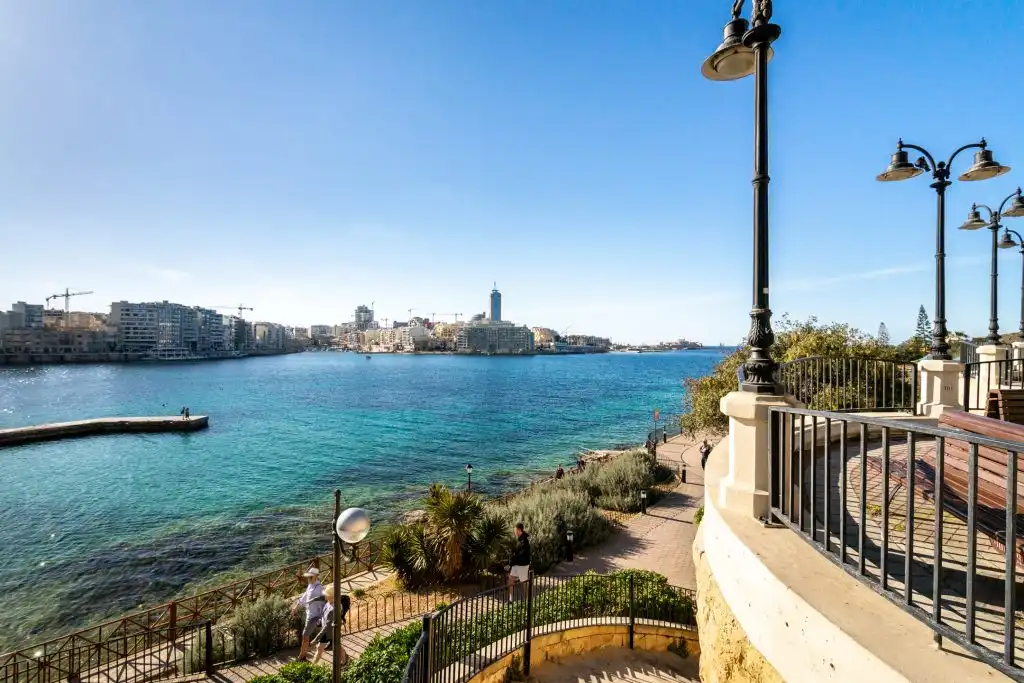
Staying in Malta?
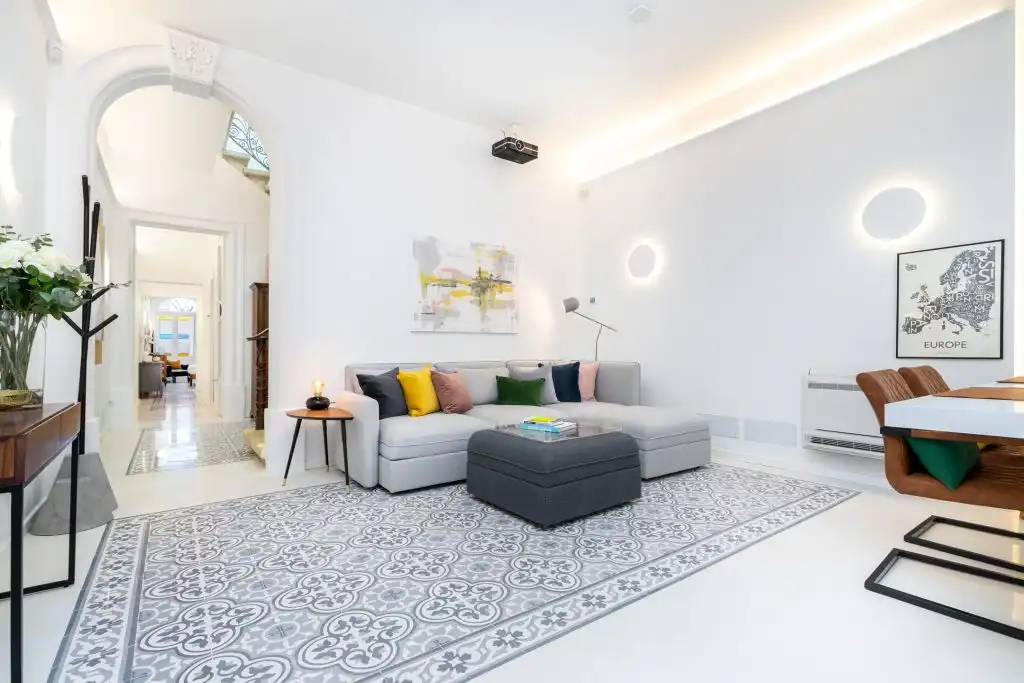
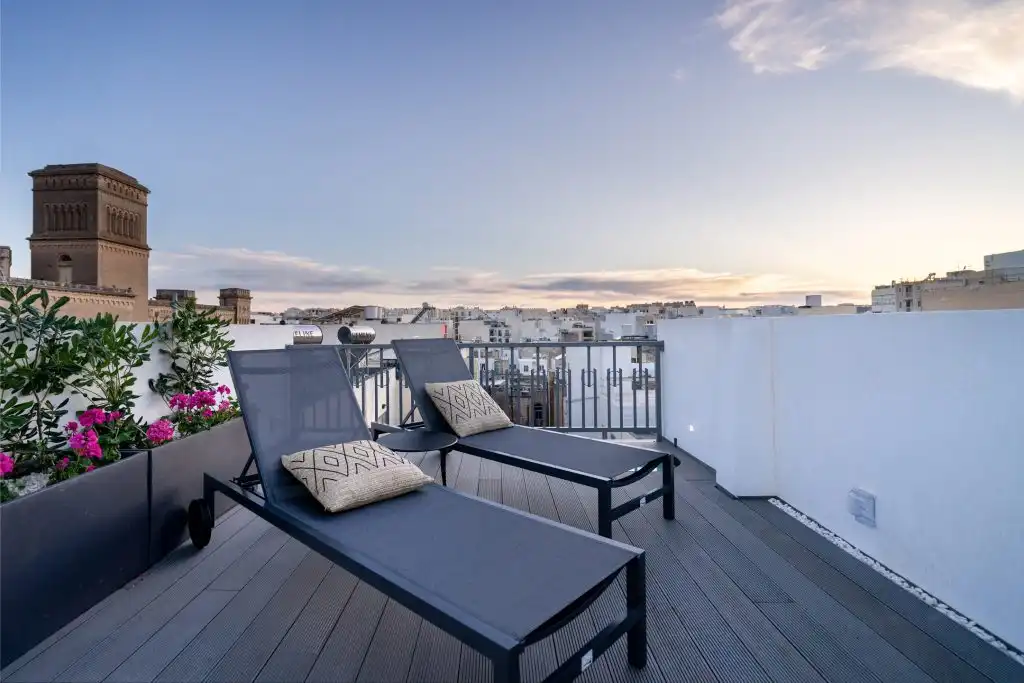
Aster House sleeps up to 9, with a rooftop chillout, a 1930s outdoor tub, and a media room with a 2-metre projector screen. 150 metres from the Sliema seafront, 5 minutes from the Valletta ferry.
The major sights of Valletta

1. St John’s Co-Cathedral — and the Caravaggio
The unassuming exterior hides one of Europe’s most overwhelming baroque interiors: every surface gilded, the floor a carpet of marble tombs, and Caravaggio’s Beheading of Saint John in the Oratory — the only painting he ever signed (his signature appears in the blood pouring from the saint’s neck). It is also the largest canvas Caravaggio ever painted, at almost 3.7 by 5.2 metres.
- Adult ticket €15, students and seniors €12, under-12s free; audio guide included
- Open Monday to Friday 09:30 to 16:30 (last entry 16:00), Saturday 09:30 to 12:30, closed Sunday and public holidays
- Strict dress code: shoulders and knees covered, no flip-flops, no stiletto heels (slip-on flat covers provided)
- No photography in the Oratory (the Caravaggio room); flash banned everywhere
- Quietest at first entry 09:30 weekdays, or after 15:00; cruise dumps hit hardest 10:30-13:00
- Allow 90 minutes minimum; pair with St Jerome Writing in the same Oratory
2. The Grandmaster’s Palace State Rooms & Armoury
Reopened in 2022 after a long restoration, the State Rooms display painted ceilings, Gobelins tapestries, and the throne room of the Order of St John. The often-overlooked half is the Armoury — over 10,000 pieces of Knights’ armour, including the suit worn by Grandmaster Alof de Wignacourt. Most visitors race through it; budget the time.
3. Fort St Elmo and the National War Museum
The fort that broke the Ottoman siege of 1565 now houses the National War Museum, which includes the actual George Cross awarded to the entire Maltese people in 1942 by King George VI — the only George Cross ever given to a country. The In Guardia historical re-enactment parade runs on irregular Sundays roughly monthly and is included with your ticket.
4. Lascaris War Rooms
The underground WWII command bunker where the defence of Malta was coordinated — map rooms, signal rooms, and the room from which Eisenhower directed the invasion of Sicily in 1943. One of Europe’s most atmospheric military museums.
5. Casa Rocca Piccola
A 16th-century palazzo still lived in by the de Piro family. The marquis personally gives tours of his own home, including the wine cellar, the private chapel, and the 12-metre-deep WWII air-raid shelter dug into the bastions underneath. One of my favourite slightly off-piste hours in Valletta.
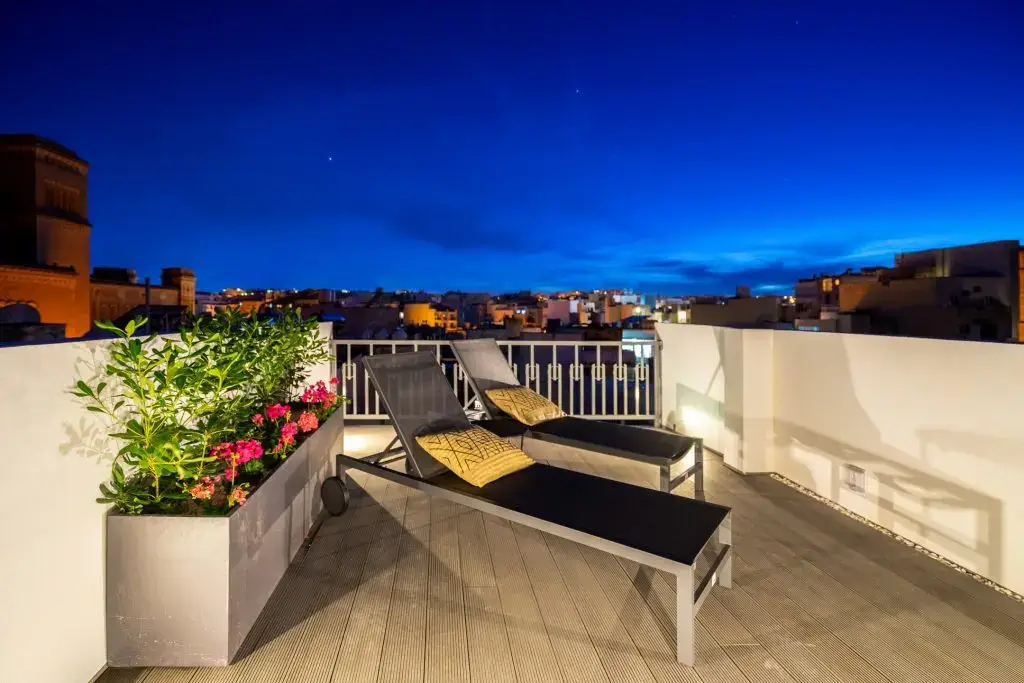
Visiting Valletta? Aster House is a 10 minute ferry across from Valletta, in central Sliema, sleeping up to 9 in three super king ensuites.
Best viewpoints and walks
6. Upper Barrakka Gardens and the Saluting Battery
Free, open from around 7am, and the best view in Malta — the Three Cities laid out across the Grand Harbour. The Saluting Battery directly below the gardens fires an eight-gun salute every day at 12:00 and 16:00. Entry to the Saluting Battery itself is €3 and includes a short guided talk before each firing. Arrive 15-20 minutes early for a railing spot at the noon firing — it is dramatically more crowded than the 16:00.
7. The Barrakka Lift to Lascaris Wharf
A glass lift connects Upper Barrakka Gardens directly down to Lascaris Wharf, where the Three Cities ferry leaves. €1 going down, free coming up — designed to encourage tourists into the city rather than out of it.
8. Walk the bastions at sunset
The walls of Valletta form a continuous walkway. Start at Hastings Gardens and head north through St Michael’s Bastion for the best sunset over Marsamxett Harbour and Manoel Island — gold light on limestone, the harbour below, and almost no other tourists.
9. Hastings Gardens
The quietest of the three garden viewpoints, and the angle most photographers prefer for Marsamxett, Manoel Island, and Sliema across the water. Rarely busy.
10. Lower Barrakka Gardens and the Siege Bell War Memorial
Often confused with Upper Barrakka and only an 8-minute walk along the bastions. The Siege Bell rings daily at noon in remembrance of those who died defending Malta in WWII. Quieter and more contemplative than Upper Barrakka.
11. The dghajsa across to the Three Cities
Traditional water taxis cross the Grand Harbour from Lascaris Wharf to Birgu in 10 minutes for around €2 — cheaper than the official ferry and far more atmospheric. Birgu’s waterfront restaurants are among the best evening spots on the island.


Streets, squares, and shopping
12. Republic Street and Merchants Street
The two parallel arteries of Valletta. Republic Street takes you past the bigger landmarks and the better-known shops. Merchants Street, one block east, is the daily market and the locals’ street — quieter cafes, older businesses, less polished and more interesting.
13. Strait Street (“The Gut”)
Once the British Mediterranean Fleet sailors’ bar district, full of jazz clubs, brothels, and brawls. Now a cocktail-and-dinner lane lined with small bars and restaurants. Best after dark.
- Tico Tico — small jazz bar, intimate, regulars on weekends
- The Pub — tiny British-style pub where Oliver Reed died during the filming of Gladiator in 1999; memorabilia on the walls
- Trabuxu Wine Bar — cellar setting, strong wine list, light food; reservations advised on Friday and Saturday
- Bridge Bar’s Jazz on the Steps — technically just off Strait Street near Victoria Gate, free Friday-night jazz on the staircase from May to October
- Yard 32 — gin bar with tapas, popular with locals
14. Sunday market on Merchants Street
Vintage, antiques, books, second-hand records, and the more eccentric end of Maltese flea-market culture. Sunday mornings only.
Culture and museums
15. MUZA — the National Museum of Art
Maltese and European art from medieval to contemporary, in a beautifully renovated knights’ auberge. Far quieter than St John’s and a useful pairing with the Grandmaster’s Palace.
16. Manoel Theatre
One of the oldest working theatres in Europe, built in 1731 by Grandmaster Antonio Manoel de Vilhena. Daytime tours run regularly, but I would recommend trying to time a performance — the gilded boxes and the 600-seat horseshoe are best seen with the chandeliers up.
17. The Malta Experience
A 45-minute audiovisual primer on 7,000 years of Maltese history. A useful first stop on day one if you want context for the museums you are about to visit.
Food and drink in Valletta
18. Pastizzi
Maltese flaky pastry filled with ricotta or mushy peas, eaten standing up with a strong coffee. Agius Pastizzeria on St Paul Street is the local hole-in-the-wall — cash only, queue, no seating, around €0.50 each. Caffe Cordina on Republic Street is the historic, frescoed alternative, going back to 1837 and considerably more polished — pastizzi around €1.50, but worth it for the room.
19. Fenkata — the rabbit feast
The best fenkata is traditionally taken in the country villages of Mgarr or Bahrija, but in Valletta itself Rubino on Old Bakery Street is the long-running classic. Booking essential for Friday lunch. Mains run €18-26. Legligin on St Lucia Street offers a fixed Maltese tasting menu in a cosy cellar for around €35.
20. Lampuki pie (lampuki torta)
Lampuki (mahi-mahi/dorado) is in season from late August to December, peaking in September and October. The traditional dish is lampuki pie — lampuki, spinach, cauliflower, and olives in pastry. Try it at Nenu the Artisan Baker on St Dominic Street, or at Rubino in season.
21. Caffe Cordina on Republic Square
Coffee at Caffe Cordina goes back to 1837. The cathedral-front squares are touristy but the people-watching is unbeatable, the room is properly historic, and the ricotta pastries are the best in the city.
22. Is-Suq Tal-Belt — the Valletta covered market
A restored 19th-century food hall on Merchants Street with multiple stalls, ftira sandwiches around €7-10, decent for a fast lunch. The rooftop terrace is an under-publicised evening spot.
Less-touristed gems
23. The National Library (Bibliotheca)
Free entry to an extraordinary 18th-century reading room on Republic Square holding the archives of the Order of St John. Mon-Fri mornings only. Most tourists walk straight past.
24. St Paul’s Shipwreck Church
Gilded, baroque, atmospheric, holds a wrist bone of St Paul and a piece of the column on which he was beheaded. Free to enter and dramatically less crowded than St John’s.
25. Our Lady of Victory Church
Valletta’s oldest building (1566), small, recently restored ceiling frescoes, €3 entry, nearly empty most days.
26. The Carmelite Church dome
The giant ovoid dome that dominates the Valletta skyline. You can climb it on guided tours when the schedule allows — check with the parish in advance.
Practical tips for Valletta
Getting there from Sliema
- Sliema-Valletta ferry: Marsamxett side, every 30 minutes, single €1.50, return €2.80, 5-7 minute crossing. Operated by Valletta Ferry Services. Far faster than driving.
- Bus: Routes 13, 14, and 15 run from Sliema to the Valletta terminus. Single €1.50 winter / €2.00 summer. Slower than the ferry.
- By car: Don’t. Valletta is largely pedestrianised; the few car parks (MCP underground, St James) charge €1.50-2.50 per hour. Use the Park & Ride at Floriana or Blata l-Bajda with a shuttle bus.
When to go
- Most museums close Mondays
- Cruise crowds peak 10:30-13:00; arrive before 10am or after 3pm
- Wear flat shoes — the cross-streets are stepped
- Stay overnight if you can — Valletta after 6pm, once the cruise ships leave, is the city locals love
Best entry point
The City Gate (Renzo Piano, 2014) is the iconic arrival — bus and taxi drop-off, the dramatic stepped approach to Pjazza Tritoni, and the immediate hit of Republic Street. The Marsamxett gate from the Sliema ferry is quieter and a pleasant uphill walk.
Where to stay for a Valletta trip
I almost always recommend Sliema as a base for a Valletta trip. The 5-minute ferry crossing is part of the experience, you avoid Valletta’s parking nightmare entirely, and the seafront promenade in Sliema gives you somewhere to come back to in the evening. Read my full Where to Stay in Malta guide for area-by-area trade-offs. Aster House sits a 5-minute walk from the Sliema ferry terminal.

A Note From Susan
“Valletta is the city I send every guest to on their first morning. Take the 9am ferry from the Strand, walk up through the City Gate, and start with St John’s Co-Cathedral before the cruise crowds arrive at 10:30. By the time you have stood five minutes in front of the Caravaggio you will know exactly why we love this city.”
— Susan, Espais Roca founder
More to Explore
- Where to Stay in Malta: Best Areas Guide
- What to Do in Malta: My Complete Guide
- Best Time to Visit Malta: Month-by-Month
- Exploring Sliema, Malta
Frequently Asked Questions
How many days do you need in Valletta?
1 full day for the highlights, 2-3 to do it justice with the museums, the harbour, and an evening on Strait Street. As an overnight stay, Valletta is at its best after 6pm once the cruise ships leave.
Is Valletta walkable?
Yes — the entire city fits in a 1km by 0.6km grid. Republic Street and Old Bakery Street are flatter spines; the cross-streets running north-south are stepped, so wear flat shoes.
Best time to visit Valletta?
April to May or October for weather. Mornings before 10am or afternoons after 3pm to avoid cruise crowds. Most museums are closed on Sundays.
What is the best free thing to do in Valletta?
Walk the bastions at sunset and watch the noon or 16:00 gun salute from Upper Barrakka Gardens. Both free, both unforgettable. The National Library reading room is also free, Mon-Fri mornings.
How do I get to Valletta from Sliema?
The Sliema-Valletta ferry runs every 30 minutes from the Sliema ferry terminal, takes 5-7 minutes, and costs €1.50 single. Far faster than driving and avoids Valletta’s parking situation.
Are Valletta’s museums open on Mondays?
Most are closed on Mondays. St John’s Co-Cathedral is open. Always check ahead; the National Museum of Archaeology and several others close on Monday and Sunday.
What is the dress code at St John’s Co-Cathedral?
Shoulders and knees covered, no flip-flops, no stiletto heels (slip-on flat covers are provided). The dress code is strictly enforced.
What time are the gun salutes in Valletta?
12:00 and 16:00 daily from the Saluting Battery below Upper Barrakka Gardens. Gardens are free; battery entry is €3 and includes a short guided talk.
Stay at Aster House
5 minutes from Valletta’s ferry terminal.
Aster House sleeps up to 9 across three ensuite super-king bedrooms, with a rooftop chillout, projector media room, 1930s outdoor tub, and gas BBQ on the terrace. 150 metres from the Sliema seafront.
Check availability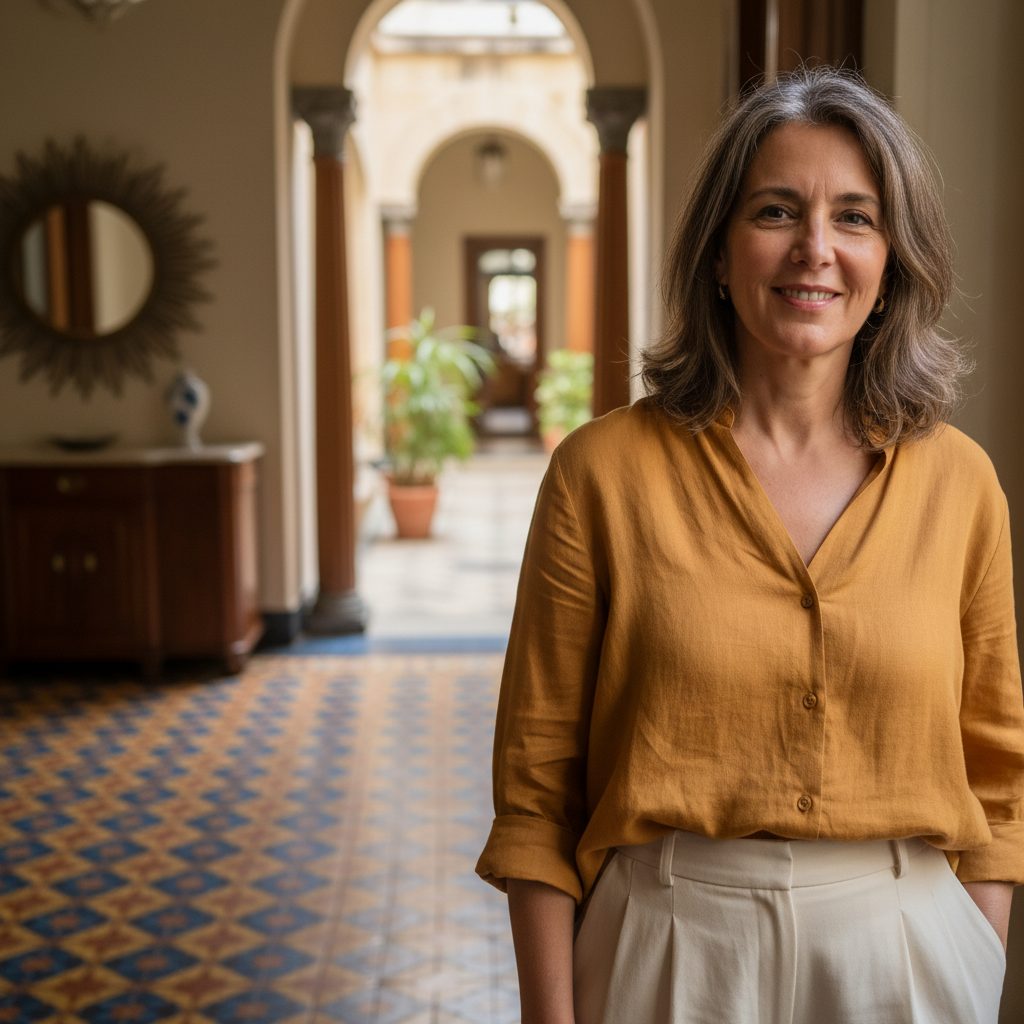
Susan
Susan is the host of Aster House and a founder of Espais Roca, a small collection of heritage homes lovingly restored across Malta, Portugal and the UK. She lives near the villa, welcomes most guests personally, and is on hand by message or phone during every stay.
Read more about Susan and Aster House →