
At A Glance
Planning your stay?
Stays — check availability and book direct.
Malta in winter runs from December to February, with daytime highs of 16 to 17°C, around three times the December and January sunshine of London, and a calendar of Christmas markets, baroque concerts and Carnival.
- Average highs are 17°C in December and 16°C in January and February, with the sea at 15 to 18°C.
- Malta gets 161 to 178 hours of sunshine a month in winter, against 48 to 71 hours in central London.
- The Valletta Baroque Festival runs from 7 to 24 January 2027, and Carnival 2027 is expected from 4 to 9 February.
- Flights from London to Malta take around three hours.
- Aster House in Sliema has underfloor heating and a projector media room for cooler winter evenings.
When the days in Britain shrink to grey afternoons and dark evenings, Malta in winter feels like another world. The sun still sets over the sea, the limestone glows gold in the late afternoon, and you can sit outside for lunch in a light jumper. Days in December still average 17°C, which is why so many of my guests swap a British December for Malta in December, with its Christmas lights and bright, mild afternoons.
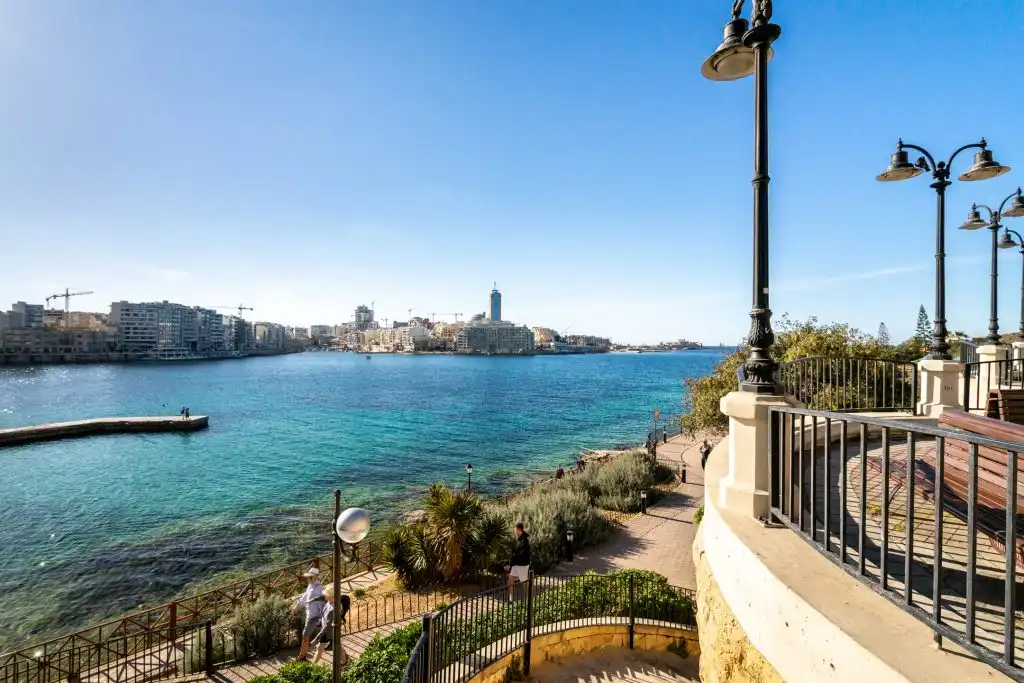
Winter is also when Malta feels most like home to the people who live here. Maltese families fill the squares for Christmas and Carnival, the churches glow with candles, and the museums, walled cities and harbour towns are a pleasure to explore at your own pace. From a base in Sliema, you can walk the seafront every morning, take the ferry to Valletta for the day and come back to plenty of things to do in Sliema in the evening, with restaurants and cafés open all winter.
A winter break in Malta suits couples looking for sunshine and culture, families escaping the school-term gloom, and anyone planning a longer stay to swap a British January for Mediterranean light. It is also some of the best value of the year for flights and villas. The months, festivals, day trips and practical details that make a Malta winter break work are all set out in the sections that follow.
Planning a winter break in Malta?
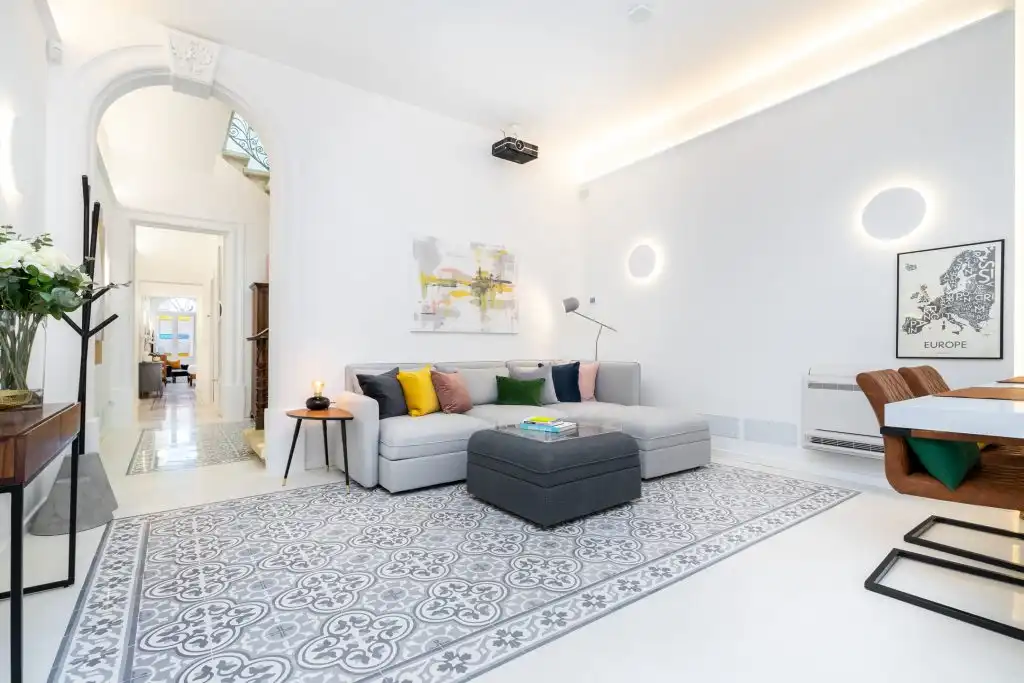
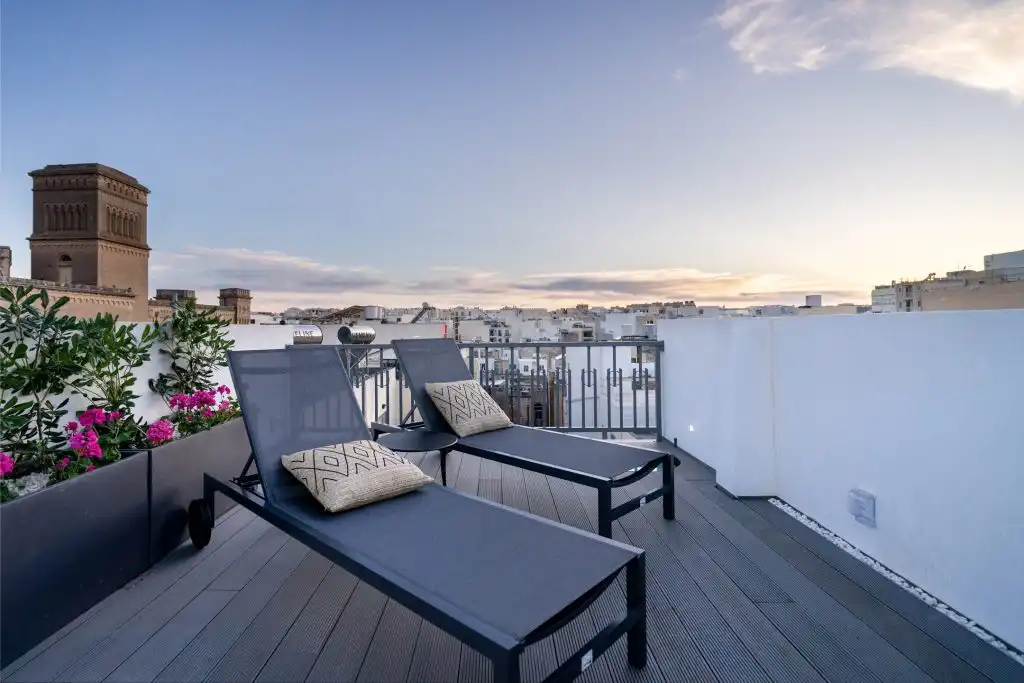
Aster House sleeps up to 9, with underfloor heating, a media room with a 2-metre projector screen and a rooftop terrace for sunny winter afternoons. 150 metres from the Sliema seafront.
Malta in Winter vs the UK: Winter Sun, Temperatures and Sunshine Hours Compared
The difference between a British winter and a Maltese one is easiest to see side by side. Malta is around twice as warm by day and gets roughly three times as much sunshine as central London in December and January. The sea stays warmer than the air in Britain all winter, which is why the Maltese coast rarely feels bleak even on a cloudy day.
| Month | Malta average high | London average high | Malta sunshine hours | London sunshine hours | Malta sea temperature |
|---|---|---|---|---|---|
| December | 17°C | 9°C | 161 | 48 | 18°C |
| January | 16°C | 9°C | 169 | 52 | 16°C |
| February | 16°C | 9°C | 178 | 71 | 15°C |
Malta figures are 1991 to 2020 averages recorded at Luqa, and London figures are central London station averages, rounded to the nearest whole number. The numbers are averages, so expect a mix of sunny days in the high teens and cooler, windier spells. What stays constant is the light: even in the shortest days of December, Malta has noticeably longer and brighter afternoons than the UK.
Winter Sun in Malta at a Glance
- Around 5 to 6 hours of sunshine a day from December to February
- Daytime highs of 16 to 17°C and nights of around 10 to 12°C
- Sea temperature of 15 to 18°C, too cool for most swimmers but lovely to walk beside
- Flights of around three hours from London and direct routes from many UK airports
- The same three-pin plugs as the UK and English as an official language
When Does Winter Start in Malta? The Maltese Winter Season Explained
Winter in Malta runs from December to February. November is still warm, with average highs of 21°C and a sea that holds its summer heat, but it brings the first heavier rain and the first cooler nights. By December, highs settle at around 17°C, and January and February are the coolest months of the year at around 16°C by day and 10°C at night.
December is statistically the wettest month, with around 94mm of rain, although it tends to fall in short, heavy showers between long sunny spells rather than in days of drizzle. The winds make the biggest difference to how winter feels: the north-westerly majjistral brings cool, clear weather, while the north-easterly gregale can whip up rough seas along the Sliema front for a day or two. By March, highs climb back to 17°C and the countryside turns green and full of wildflowers.
Maltese homes are built to stay cool in summer, with stone walls and tiled floors, so many feel chilly indoors in January. That is worth thinking about when you choose where to stay. Aster House has underfloor heating throughout, so the tiled floors are warm underfoot and the house stays comfortable even on the coolest evenings.
Maltese Winter Seasons at a Glance
- November: average high 21°C, first heavier rain and cooler nights
- December: average high 17°C, around 94mm of rain in short showers
- January: average high 16°C, the coolest month with clear, crisp days
- February: average high 16°C and the sunniest of the winter months
- March: highs back to 17°C, wildflowers and the start of spring
Malta in December: Christmas Markets, Festive Lights and Mild 17°C Afternoons
December is the most festive month of a Malta winter. From the first week of the month, towns across the island light up for Christmas, and the markets begin with Natalis Notabilis in Rabat, listed for 4 to 13 December 2026, and Fairyland Santa’s City at the Valletta city gate. My guide to the Malta Christmas markets covers every market with its dates, what to buy and how to get there from Sliema.
Beyond the markets, December brings candlelit Midnight Mass, parish crib exhibitions and Christmas lights along Republic Street in Valletta. Christmas Day and Boxing Day are family days in Malta, with many restaurants closed, so a villa with a proper kitchen makes Christmas lunch easy. New Year’s Eve is lively, with celebrations in Valletta and along the Sliema and St Julian’s seafront.
Malta in December at a Glance
- Average high of 17°C and a sea temperature of 18°C
- Natalis Notabilis in Rabat: listed for 4 to 13 December 2026
- Christmas at Valletta Waterfront on 25 December and New Year’s Eve on 31 December 2026
- Many restaurants close on Christmas Day and Boxing Day
- Crib exhibitions and Midnight Mass across the island
Malta in January: The Valletta Baroque Festival, Epiphany and Clear Winter Days

January is the coolest month in Malta, with highs of around 16°C, but it is also one of the clearest, with long spells of blue sky between the showers. The Christmas season ends with Epiphany on 6 January, and the island settles into a relaxed rhythm that suits sightseeing, long lunches and coastal walks. You will find the full Malta in January picture, with temperatures, rainfall and events, in my month guide.
The highlight of the month is the Valletta Baroque Festival, which runs from 7 to 24 January 2027. Concerts take place in some of the most beautiful buildings in Malta, including St John’s Co-Cathedral, the Manoel Theatre, Verdala Palace and Palazzo Parisio, and hearing baroque music in a baroque church is an experience that stays with you. Tickets are sold through the festival and the Manoel Theatre, and the most popular concerts sell out early.
Malta in January at a Glance
- Average high of 16°C and around 5.5 hours of sunshine a day
- Epiphany on 6 January closes the Christmas season
- Valletta Baroque Festival: 7 to 24 January 2027
- Concert venues include St John’s Co-Cathedral and the Manoel Theatre
- Sea temperature of around 16°C
Malta in February: Carnival 2027, the Feast of St Paul’s Shipwreck and Almond Blossom
February is the sunniest month of the Maltese winter, with around 178 hours of sunshine and highs of 16°C. The countryside starts to wake up, with almond trees flowering in the valleys and the fields turning bright green after the winter rain. For the weather and events day by day, see my guide to Malta weather in February.
The month is dominated by Carnival, expected to run from Thursday 4 to Tuesday 9 February 2027, with colourful floats and costumed dancers filling Valletta and Floriana and an older, satirical carnival in Nadur on Gozo. On 10 February, Malta celebrates the Feast of St Paul’s Shipwreck, a national public holiday marking the apostle’s arrival on the island, with a grand procession through the streets of Valletta.
Malta in February at a Glance
- Average high of 16°C and around 6.5 hours of sunshine a day
- Carnival 2027: expected from 4 to 9 February, in Valletta, Floriana and Nadur
- Feast of St Paul’s Shipwreck: 10 February, a public holiday
- Almond blossom in the countryside
- Sea temperature of around 15°C
Best Things to Do in Malta in Winter: Walled Cities, Ancient Temples and Harbour Towns

Winter is the perfect season for the sights that make Malta special. Cooler days make walking the walled cities a pleasure, and the museums, churches and temples are open all year.
1. St John’s Co-Cathedral and the Valletta Museums
St John’s Co-Cathedral is the finest baroque interior in Malta, with gilded walls, a floor of marble tombstones and Caravaggio’s Beheading of Saint John in the oratory. In winter you can take your time in front of the painting and linger over the details of the ceiling.
Combine it with the Grandmaster’s Palace and the National Museum of Archaeology, both within a few minutes’ walk on Republic Street. Finish at the Upper Barrakka Gardens for the view over the Grand Harbour.
2. Mdina and Rabat
Mdina, the old walled capital, is at its most atmospheric in the soft winter light, when the narrow streets and palaces glow gold in the late afternoon. Walk the bastions for views across the island, then step outside the walls into Rabat.
In Rabat, St Paul’s Catacombs and the Wignacourt Museum make a fascinating underground afternoon, and the town is full of bakeries selling hot pastizzi. Mdina and Rabat are around half an hour from Sliema by car or taxi.
3. Ħaġar Qim and Mnajdra Temples
The megalithic temples of Ħaġar Qim and Mnajdra, on the south coast, date from around 3600 to 3200 BC and are older than Stonehenge and the Egyptian pyramids. They are UNESCO World Heritage Sites, protected under large canopies, and the clifftop setting over the sea is spectacular in clear winter light.
A walking trail links the two temples, and the visitor centre explains how they were built. Wrap up against the wind, as the headland is exposed on cooler days.
4. The Hypogeum of Ħal Saflieni
The Hypogeum is an underground prehistoric burial site carved into the rock more than 5,000 years ago, and one of the most extraordinary places in Europe. Visitor numbers are strictly limited each day to protect it.
Winter is the easiest time to get a ticket, but it is still worth booking several weeks ahead. Photography is not allowed inside, which only adds to the sense of stepping back in time.
5. Marsaxlokk Sunday Fish Market
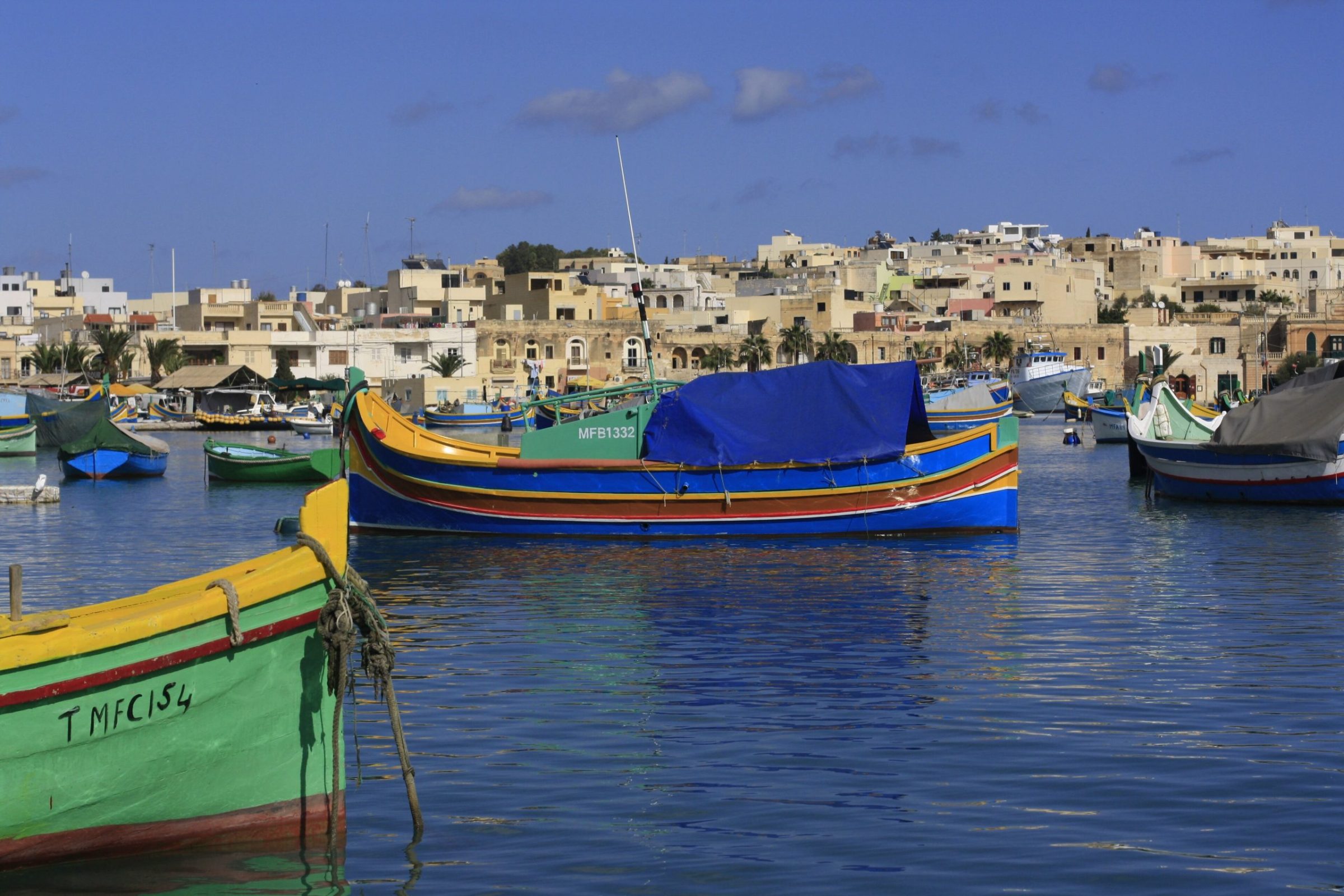
The fishing village of Marsaxlokk, with its colourful luzzu boats, holds a lively fish and produce market along the harbour every Sunday morning. It is one of the best places in Malta to see local life, and the harbour-side restaurants serve the catch of the day for lunch.
Go early for the best of the market, then walk to St Peter’s Pool, a natural rock pool around half an hour away on foot, where the sea is dramatic on a windy winter day.
6. The Three Cities and the Grand Harbour
Birgu, Senglea and Cospicua, across the Grand Harbour from Valletta, are older than the capital and full of quiet lanes, fortifications and waterfront cafés. Take the ferry from Valletta or a traditional dgħajsa boat across the harbour.
The Malta Maritime Museum and Fort St Angelo in Birgu are open all winter, and a harbour cruise from Sliema is a lovely way to see the fortifications from the water on a calm day.
A Winter Week in Malta From Sliema
- Day 1: Sliema seafront walk and the ferry to Valletta
- Day 2: St John’s Co-Cathedral, the Grandmaster’s Palace and the Upper Barrakka Gardens
- Day 3: Mdina and Rabat, with St Paul’s Catacombs
- Day 4: Ħaġar Qim, Mnajdra and the Blue Grotto viewpoint
- Day 5: Marsaxlokk Sunday market and St Peter’s Pool
- Day 6: Gozo day trip to the Citadel
- Day 7: The Three Cities and a harbour cruise




Winter Day Trips From Sliema: Gozo, the Citadel and the Island of Comino
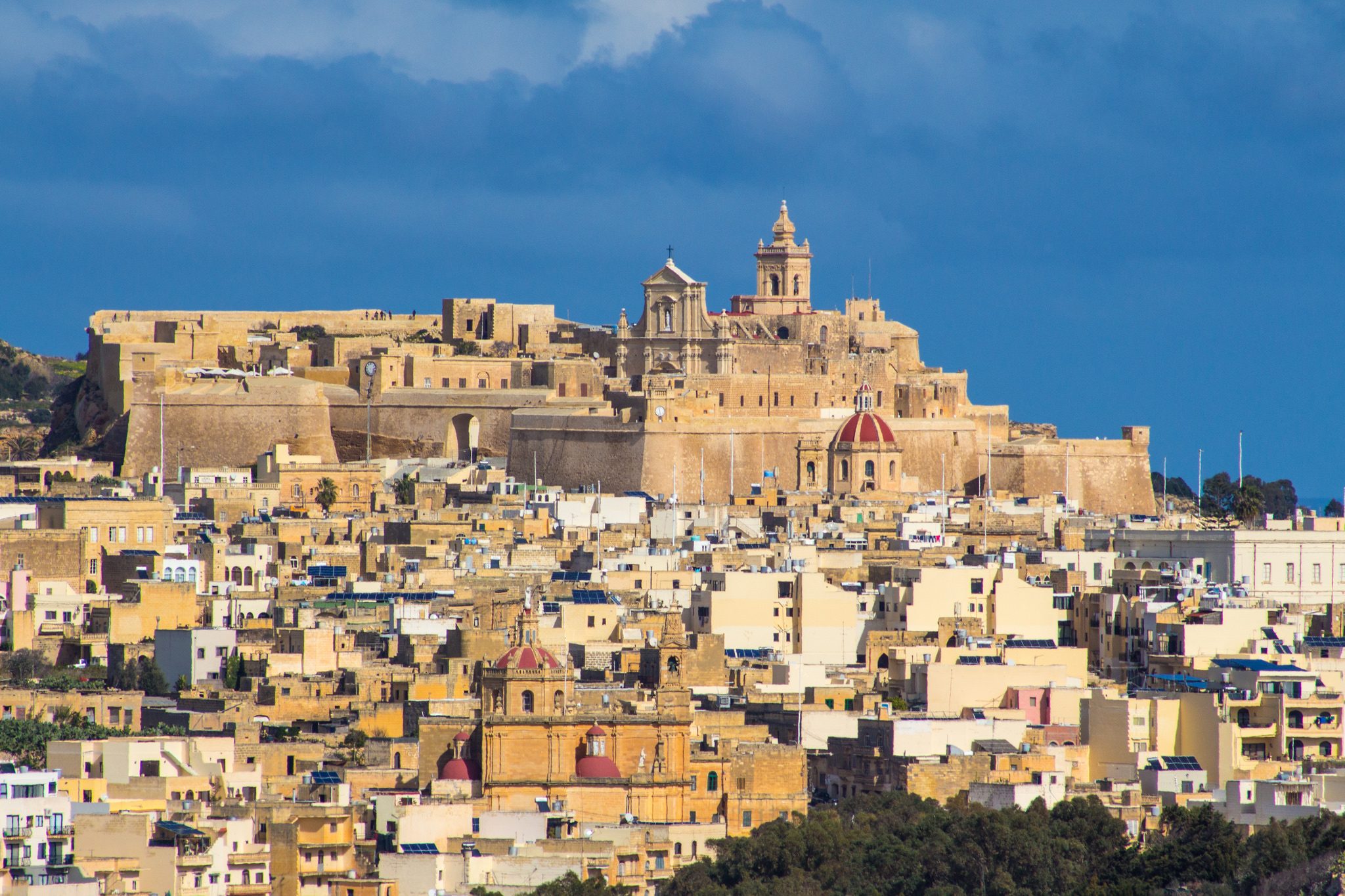
Gozo is a wonderful winter day trip. The ferry from Cirkewwa takes around 25 minutes, and the island is greener and more rural than Malta, with terraced fields, farmhouses and dramatic cliffs. In Victoria, the Citadel sits on a hilltop with views across the whole island, and its cathedral, museums and walls are open all year.
Ramla Bay, with its red-orange sand, is lovely for a winter walk, and the salt pans at Xwejni are striking when the waves roll in. Comino and the Blue Lagoon are reached by boat, but trips run less often in winter and are cancelled when the sea is rough, so keep a Comino visit flexible and check the forecast on the day.
Gozo Day Trip Essentials
- Ferry from Cirkewwa to Mġarr: around 25 minutes, running all year
- The Citadel in Victoria: panoramic views and museums
- Ramla Bay and the Xwejni salt pans for coastal walks
- Comino boats run less often in winter and depend on the sea
- Allow a full day, with lunch in Victoria or Xlendi
Malta Winter Walks: Coastal Paths, the Blue Grotto Cliffs and the Sliema Promenade

Winter is the best time of year for walking in Malta. The heat of summer is gone, the countryside is green after the rain, and the coastal paths are at their most dramatic. The clifftop viewpoint above the Blue Grotto, on the south coast near Wied iż-Żurrieq, looks down on a huge limestone arch, and boat trips into the caves run on calm days.
Closer to home, the Sliema promenade runs from the Tigné peninsula all the way round to St Julian’s, and a morning walk along it, with a coffee at one of the seafront kiosks, is one of the simple pleasures of a Malta winter. For something longer, the Dingli Cliffs and the Victoria Lines offer some of the finest walking on the island.
Best Winter Walks in Malta
- The Sliema promenade from Tigné Point to St Julian’s
- The Blue Grotto viewpoint and the south coast near Wied iż-Żurrieq
- The Dingli Cliffs, the highest point on the coast
- The Victoria Lines, a fortified ridge across the island
- The coastal path from Ħaġar Qim to Mnajdra
Long Stay Winter Holidays in Malta: Why a Villa Works for Weeks at a Time
More and more of my guests come to Malta for several weeks in winter, swapping January in Britain for Mediterranean light and mild days. A longer stay lets you settle into a routine, with morning walks on the seafront, a favourite café for lunch and day trips when the weather is at its best, rather than rushing to fit everything into a few days.
For a long stay, space and comfort matter more than ever. A whole house gives you a proper kitchen, a place to work if you need to, separate bedrooms for family or friends who join you, and room to spread out on a rainy afternoon. If you are thinking about a longer winter stay at Aster House, get in touch and I will be happy to talk through dates.
Planning a Long Winter Stay in Malta
- Choose a base with heating, as many Maltese homes are built for summer
- Look for a full kitchen and a separate space to work
- Pick a town with shops and restaurants open all winter, such as Sliema
- Plan day trips around the forecast and keep Comino flexible
- Ask Aster House about dates for stays of several weeks
What to Pack for Malta in Winter
Pack for a Mediterranean spring rather than a British winter. Days are mild enough for a light jumper, but evenings by the sea can feel cool, especially when the wind picks up, so layers are the key. A waterproof jacket and comfortable walking shoes will cover you for the showers and the limestone streets of Valletta and Mdina.
Malta Winter Packing List
- Light jumpers and long-sleeved tops for layering
- A warm jacket for evenings and windy days
- A waterproof jacket or compact umbrella
- Comfortable walking shoes with good grip for the limestone streets
- Sunglasses and sun cream, because the winter sun is still strong
Sliema in Winter: Why Aster House Makes an Easy Base for a Malta Winter Break
Sliema is the most practical base in Malta for a winter break. The restaurants, cafés and shops stay open all year, the ferry to Valletta leaves from the seafront, and buses reach almost every corner of the island. After a day of sightseeing, it is a short walk from the promenade to a warm house rather than a long drive back from a resort that has closed for the season.
Aster House is a restored Art-Deco townhouse 150 metres from the sea, with three super-king bedrooms, each with an ensuite, and space for up to nine guests. Underfloor heating keeps every room warm on cooler nights, the media room with its 2-metre projector screen is perfect for a film on a rainy evening, and on sunny winter afternoons the rooftop terrace is a lovely spot for lunch. Nightly rates start from €229, with some of the best value of the year in the winter months.
Aster House in Winter
- 150 metres from the Sliema seafront
- Sleeps up to 9 in three super-king ensuite bedrooms
- Underfloor heating throughout
- Media room with a 2-metre projector screen
- Rooftop terrace for sunny winter afternoons
- Nightly rates from €229

A Note From Susan
“January is one of my favourite months in Malta. The light is clear and golden, the Baroque Festival fills St John’s with music, and I love a long walk along the Sliema seafront followed by lunch in the sun. When friends in England tell me about their grey skies, I tell them to come and see what a Maltese winter feels like.”
Susan, Espais Roca founder
More Malta Guides for Winter
- Malta Weather in December: A Christmas Travel Guide
- Malta Weather in January: A Complete Travel Guide
- Malta Weather in February: Carnival and Climate
- Malta Christmas Markets: Dates, Stalls and Where to Go
- Things to Do in Sliema: A Local’s Complete Guide
“A beautiful, stunningly renovated villa in a great location in Sliema. Spacious bedrooms, a wonderful kitchen and a roof terrace.”
Frequently Asked Questions About Malta in Winter
Is Malta Warm In Winter?
Malta is mild in winter, with average highs of 17°C in December and 16°C in January and February, and nights of around 10 to 12°C. That is roughly twice as warm by day as central London.
When Does Winter Start In Malta?
Winter in Malta runs from December to February. November is still warm at around 21°C, and by March highs climb back to 17°C as spring begins.
What Is The Weather Like In Malta In December?
December averages highs of 17°C, a sea temperature of 18°C and around five hours of sunshine a day. It is the wettest month, with rain usually falling in short showers.
Can You Swim In Malta In Winter?
The sea is 15 to 18°C from December to February, which is too cool for most visitors, although some hardy locals swim all year. Winter is better for coastal walks than for the beach.
What Is There To Do In Malta In Winter?
Winter is ideal for St John’s Co-Cathedral, Mdina, the Ħaġar Qim temples, the Hypogeum and Gozo. Festivals include the Christmas markets, the Valletta Baroque Festival from 7 to 24 January 2027 and Carnival, expected from 4 to 9 February 2027.
Is Malta Good For A Winter Sun Holiday?
Yes. Malta gets 161 to 178 hours of sunshine a month in winter, around three times as much as London in December and January, and it is only around three hours from London by air.
Is Malta Good For A Long Stay In Winter?
Yes, especially from a year-round town such as Sliema, where restaurants and shops stay open all winter. Choose accommodation with heating and a full kitchen, as many Maltese homes are built for summer.
What Should I Pack For Malta In Winter?
Pack layers, a warm jacket for the evenings, a waterproof and comfortable walking shoes. Days of 16 to 17°C suit a light jumper, and sunglasses are still useful in the winter sun.
Stay at Aster House
Winter sun, warm floors and a villa by the sea.
Aster House sleeps up to 9 across three ensuite super-king bedrooms, with underfloor heating, a projector media room and a rooftop terrace for sunny winter days. 150 metres from the Sliema seafront, from €229 a night.
Check availabilityImage credits via Wikimedia Commons: Marsaxlokk harbour: Vlad beu, Public domain · St John’s Co-Cathedral: Simon Burchell, CC BY-SA 4.0 · Mdina: Sebastiaan ter Burg from Utrecht, The Netherlands, CC BY 2.0 · Citadel, Gozo: Matthew Benn, CC BY-SA 4.0 · Blue Grotto: Chris Brown, CC BY 2.0.